








 In our laboratory, we conduct research on antennas—the “gateways” for radio waves. Many of the technologies that underpin modern society, such as smartphones, Wi-Fi, satellite communications, and radar, rely on antennas. However, their inner workings and the fascination they hold are not widely understood.
Antennas are profoundly fascinating devices that manipulate invisible radio waves. Since their performance can vary significantly depending on their shape, size, and placement, you can experience the excitement of both theory and hands-on engineering.
ACL Antenna Laboratory offers a university-style research environment where researchers from various backgrounds—including interns and those from outside the corporate sector—come together to pursue new possibilities for antennas through research, analysis, and experimentation. Additionally, as part of our community volunteer activities, we teach children the “joy of science” by having them build antennas and experience real-world wireless communication through amateur radio programs.
Why not join us in exploring the invisible world of radio waves and taking on the challenge of research that will support the communication technologies of the future?
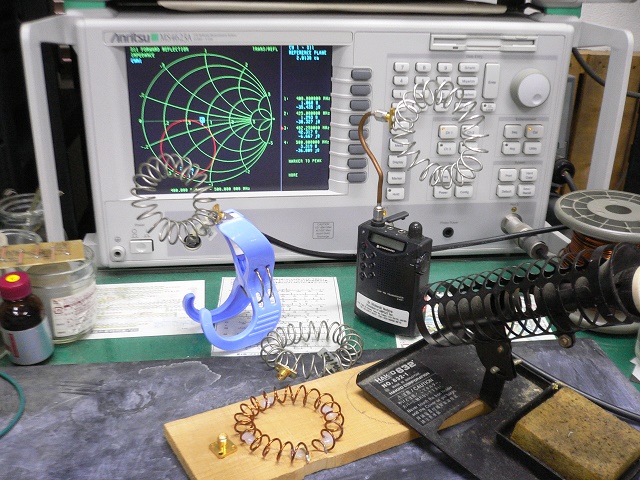 [ACL Antenna Laboratory]
* Dr. Hideyuki Nebiya, Director (AMPLET Communication Laboratory)
* Dr. Nobuo Tsukamoto (AMPLET Communication Laboratory)
* Bernhard Thiem, Dipl.Ing. (AMPLET Deutschland)
* Yusuke Kubo (Hoko Electronics)
[Co-researchers]
* Dr. Jong-Myung Woo (Chungnam National University)
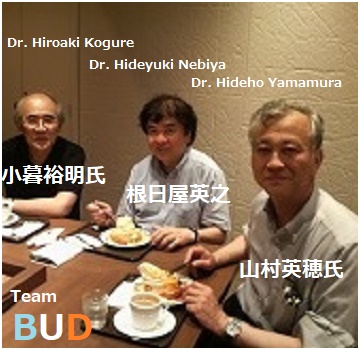
* Dr. Hiroaki Kogure (Team BUD)
* Dr. Hideho Yamamura (Team BUD)
* [Contact Us]
 (1) Akihabara Laboratory [
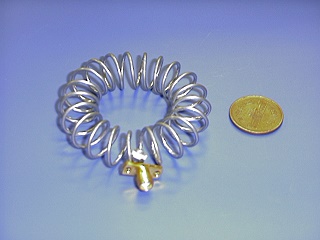 Dr. Hideyuki Nebiya invented the Spiral Ring Antenna, and received Doctorate Degree in Electronics Engineering.
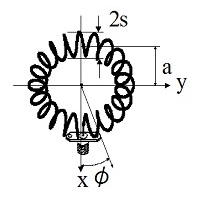 The Spiral Ring Antenna which is a small antenna having a toroidal coil shape consisting of a fixed length wire is proposed. The antenna has a size of 1/15 ~ 1/5 wavelength, and this antenna has a relatively high gain (+2.0dBi at 1/10 wavelength), and can easily be matched to a coaxial line without Balun.
 to Top